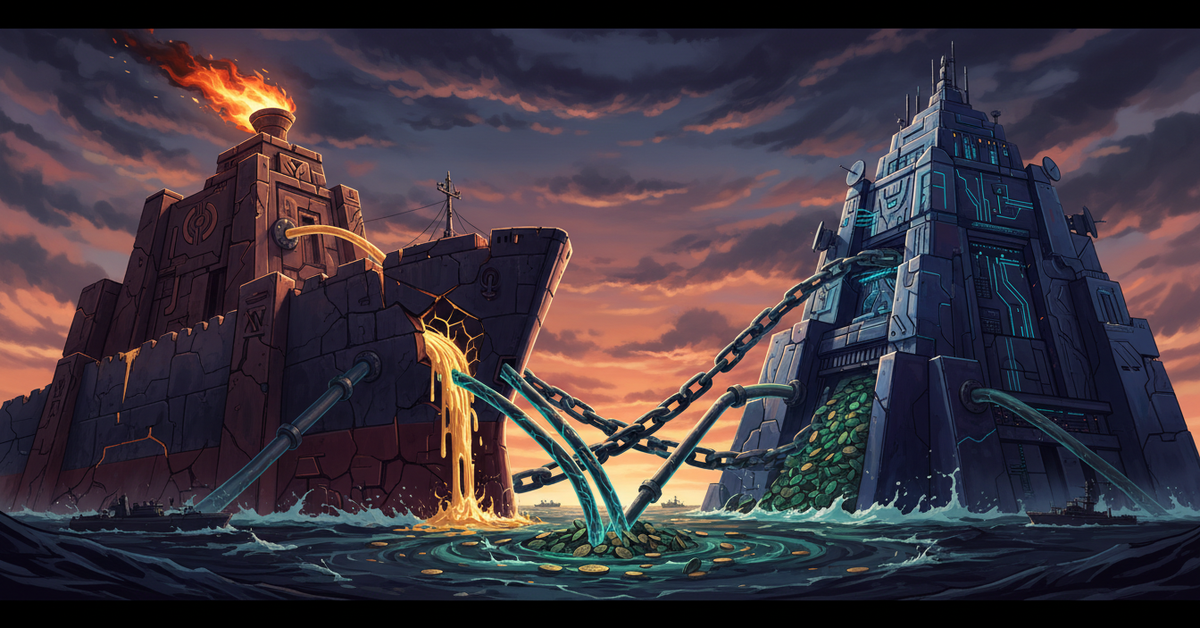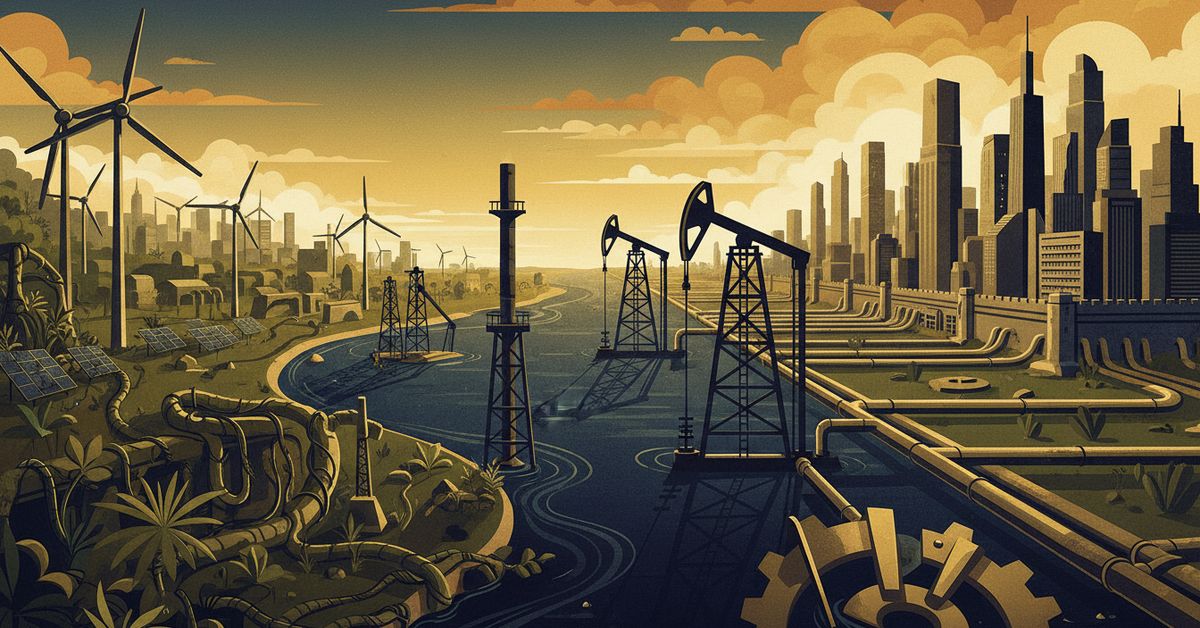
The world’s biggest oil and gas firms are placing a quiet, multi-billion-dollar wager that the energy transition will be slower, and geopolitics messier, than governments admit. The proof is not in their speeches, but in their final investment decisions for projects designed to pump hydrocarbons well into the 2050s. While climate summits debate phasing out fossil fuels, capital is flowing into complex, long-term projects on politically stable ground, from the Arctic to Indonesia.
These are not nimble shale wells. They are vast, capital-intensive undertakings that lock in production for decades. Italy’s Eni has sanctioned deep-water gas projects in Indonesia, aiming to produce 2bn cubic feet of gas and 90,000 barrels of condensate a day. In the Arctic, Norway’s Equinor is developing its Johan Castberg field in the Barents Sea. Such projects signal a belief in decades of continued demand. They are a bet on persistence.
Its Indonesian venture will supply both the domestic market and the Bontang LNG plant, giving it access to Asian buyers who, according to Rystad Energy, an analytics firm, are increasingly focused on security of supply.
The geography of these investments is a deliberate choice. The energy shocks of the past 24 months have rewritten corporate risk models, elevating political stability from a desirable trait to a prerequisite for mega-projects. Eni’s strategy is informed by an Integrated Risk Management Model that explicitly weighs geopolitical threats. Its Indonesian venture will supply both the domestic market and the Bontang LNG plant, giving it access to Asian buyers who, according to Rystad Energy, an analytics firm, are increasingly focused on security of supply. Equinor’s leadership frames its work on the Norwegian Continental Shelf as a core part of Europe’s energy security.
This European flight to safety contrasts with the strategy of American giants. ExxonMobil and Chevron are pursuing a twin-track approach. They are doubling down on the Permian basin in Texas, a vast and politically secure resource that rewards relentless efficiency over exploration risk. Simultaneously, they are pouring capital into Guyana, a spectacular geological prize but one that carries more political uncertainty. Theirs is a bet on domestic scale and high-reward frontiers, not the curated, de-risked international portfolio European firms are now building.
To be sure, this is not a wholesale abandonment of riskier territories. A forecast from Wood Mackenzie, a consultancy, suggests that while overall upstream spending will dip by 2-3% in 2026, investment will rise in parts of Africa, Latin America and the Middle East. But the flagship projects of European majors point to a different priority. They are not speculative wildcatting ventures. They are long-term commitments to politically predictable jurisdictions, designed to anchor portfolios with reliable assets that can weather market cycles and geopolitical storms.
The bet is heavily on gas. Eni’s Indonesian project, by feeding the Bontang LNG plant, taps into a global, seaborne market. This avoids the vulnerabilities of fixed cross-border pipelines. For Asian buyers, liquefied natural gas offers a way to diversify suppliers; for sellers like Eni, it provides a hedge against regional instability. The preference for gas reflects a belief that it will remain an indispensable fuel for decades, particularly in industrialising Asia, whatever the pace of renewable-energy adoption in the West.
This repositioning reveals a deep divergence between corporate strategy and public policy. While politicians set ambitious net-zero targets, the engineers of major energy firms are planning for a world where demand for hydrocarbons remains resilient. With a breakeven cost of just $35 a barrel, Equinor’s new Arctic field is not a speculative gamble on future prices. It is a 30-year commitment, engineered to be profitable even in a world of tepid demand. While governments plan for a different world, the world’s energy suppliers are building for this one.