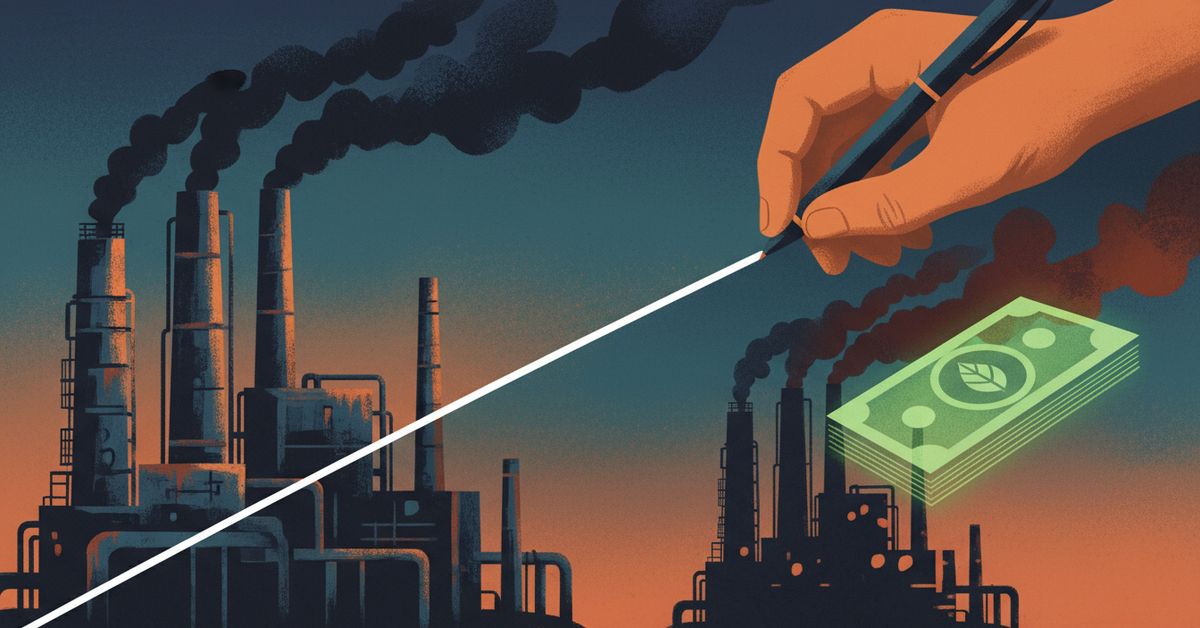
Selling a refinery is the fastest way for an oil major to cut its carbon emissions. The smokestacks still smoke. The carbon still enters the atmosphere. But the asset, and its attendant pollution, now belongs to someone else. This accounting sleight-of-hand allows public companies to present a greener face to investors, even as the industrial emissions continue under new, less transparent ownership.
On March 19th BP announced the sale of its Gelsenkirchen refinery in Germany to Klesch Group, a private industrial firm. The deal helps the British energy giant on its path to promised cost reductions. More importantly, it removes a vast, carbon-intensive facility from its portfolio, burnishing its net-zero credentials. For shareholders and climate-conscious funds, it looks like progress. The planet is less easily convinced.
BP is not alone. In the past 2-3 years, Shell sold its Fredericia refinery in Denmark to a private buyer. TotalEnergies did the same with its Lindsey refinery in Britain. The pattern is clear: publicly-listed giants are shedding carbon-heavy European assets to private operators who face far less pressure from investors and activists. These sales create a growing fleet of "shadow refineries", where ownership is opaque and green investment is discretionary.
The pattern is clear: publicly-listed giants are shedding carbon-heavy European assets to private operators who face far less pressure from investors and activists.
The Gelsenkirchen refinery has not vanished; it has moved into the shadows. Klesch Group specialises in acquiring what large corporations deem "non-core" assets. As a private entity, it operates without the public scrutiny that dogs a firm like BP. It does not publish detailed financial statements, making it impossible to track spending on environmental upgrades versus shareholder payouts. Its stated focus is on "operational excellence" and "commercial optimisation".
Before the sale, BP had ambitious plans for Gelsenkirchen. It intended to produce Sustainable Aviation Fuel (SAF) and connect the site to the GET H2 network, a major green hydrogen pipeline. The sale allows BP to avoid an estimated €1.5 bn in capital costs for this green conversion. Klesch Group has made no specific public commitments to continue these expensive projects. Its priorities appear to lie elsewhere. The firm is currently suing the EU, Germany and Denmark over windfall taxes, arguing they constrain the competitiveness of fossil-fuel companies.
This "good bank, bad bank" approach to carbon is a response to immense pressure. The EU’s Green Deal, with its emissions-trading system and carbon border taxes, makes running such facilities in Europe increasingly expensive. For a private owner, the incentive to invest billions in decarbonising a legacy refinery is weak when it can be run for cash instead. The financial logic is inescapable. Central bankers at the Bank of England and the Bank for International Settlements have warned for years that such divestments do not reduce systemic climate risk, but merely shift it to less regulated corners of the financial system.
To be sure, this is rational corporate behaviour. Klesch Group is an expert at running such facilities and may prove a more efficient operator than BP. It could argue that maintaining a competitive refinery secures jobs and Europe’s energy supply. If German subsidies make green aviation fuel profitable, it will surely pursue it. The transfer of assets from sellers who no longer want them to buyers who do is the essence of a market.
BP’s plan for Gelsenkirchen was to link it to a pipeline that would supply it with green hydrogen from 2025. The pipeline will still be built; German industrial policy will see to that. But an emissions ledger is not the atmosphere. Changing the name on a refinery’s gate does not change the chemistry of the air.